I Hate Marriage – Movie Review&Rating;
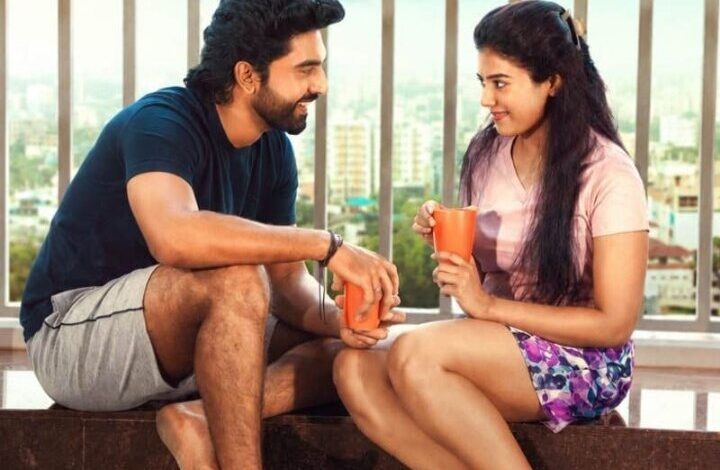
Love, marriage, and relationships have been the central themes of many films. However, I Hate Marriage takes a different approach by exploring the changing mindset of today’s youth, relationships before marriage, and evolving opinions about marriage.
The film stars Sugi Vijay and Jupsi Bhadra in the lead roles and is directed by Paramesh Renukuntla. It is produced by Dayanand Madam and Karthik Vempati under the Arya Cinema banner.
The bold dialogues and scenes in the trailer created curiosity about the film. The movie also attracted attention for receiving an ‘A’ certificate from the Censor Board. With its bold content revolving around a love story, the film was released today, Friday (November 27). Let’s find out how it performs.
Story;


Ram (Sugi Vijay) has little faith in love and marriage. His ambition is to become a film director, and he is focused on achieving that dream. Despite his mother’s repeated attempts to convince him to get married, he refuses.
Jahnavi (Jupsi Bhadra), on the other hand, believes in true love and has traditional values. She likes Ram’s personality and wants to enter into a relationship with him, but only under certain conditions.
Eventually, the two begin their journey together. Ram turns their real-life relationship into a film story, making a few changes to it. The script gets approved by a producer, but what happens in the second half becomes a suspense.
Meanwhile, Ram falls in love with Jahnavi. Does she accept his love? What conditions does she place on him? Why are some modern women hesitant about marriage? What is the connection between virginity and hymenoplasty? How do some women hide their past mistakes?
The film attempts to explore these questions while revealing the twists and turns in Ram and Jahnavi’s relationship.
Analysis;
Unlike conventional romantic films, I Hate Marriage attempts to portray social issues faced by today’s younger generation.
The film boldly discusses how some young women prefer living together without marriage, fulfilling their personal desires, and enjoying life on their own terms.
It also highlights how some young women who come to cities from villages with big dreams lose sight of their ambitions while staying in hostels and get distracted from their goals.
The director touches upon several important subjects, including whether one should marry the person they love or accept a match chosen by their family. Personal freedom, trust, and honesty are also explored.
While presenting modern youth culture, the film also highlights the importance of responsibilities. It makes an important point that not everyone goes astray; there are also people who remain focused on their goals and work hard to achieve them.
The film openly discusses different opinions about marriage. It also questions why parents who are willing to do anything for their daughters sometimes hesitate to accept the person their daughters truly love. In this aspect, the film attempts to deliver a meaningful message.
However, despite choosing bold and sensitive subjects such as love, marriage, and virginity, the director struggles to present them in an engaging cinematic manner.
The film lacks quality in its overall making, and the direction feels inconsistent. The narration is slow, and many dialogues feel routine. The screenplay fails to maintain audience interest.
The performances also needed improvement, particularly in terms of natural expressions, emotional depth, and realism. However, the climax is reasonably good.
Performances;
Sugi Vijay plays Ram, a young man with strong opinions about marriage and a burning ambition to become a film director. He performs well in the role. Ram’s transformation from someone who dislikes marriage to someone who eventually falls in love is interesting. Sugi Vijay handles these scenes effectively.
Jupsi Bhadra impresses as Jahnavi. The story revolves largely around her character. She convincingly portrays a modern young woman who wants to enjoy life according to her own choices.
Harika Rajender, Sahithi Krishna, Dr. Prithviraj, and Ravivarma Adduri play important supporting roles. They deliver performances according to the scope of their respective characters.
Technical Performance;
Cinematography: Vijay C Kumar’s cinematography is average. The film lacks visual quality in several places.
Music: Varikuppala Yadagiri’s music is good. The song Donga Munda stands out as a highlight. He appears to have a promising future in the industry.
Background Score: Praveen Immadi’s background music is decent, although some portions remind viewers of television serials.
Editing: Avula Venkatesh delivers good editing work. His experience is evident in the way scenes are trimmed and connected. The sharp cuts and scene transitions are impressive. Editing emerges as one of the film’s biggest strengths.
Direction: The director has chosen an interesting subject and attempted to present it boldly. However, he struggles to turn the concept into an engaging cinematic experience. The film needed considerably more work in terms of making and direction.
Final Verdict;
I Hate Marriage is a film that boldly discusses the changing mindset of today’s youth regarding love, marriage, and virginity.
Although the subject is interesting and relevant to modern society, the slow narration, inconsistent execution, and average technical quality prevent it from becoming an engaging film.
THE SOUTH INDIA TIMES RATING;3/5.