

Walking and Cycling Could Help Fight Climate Change Along With Improving Health
New research highlights how daily physical activities like walking and cycling can reduce carbon emissions improve public health and play a crucial role in tackling global climate challenges effectively
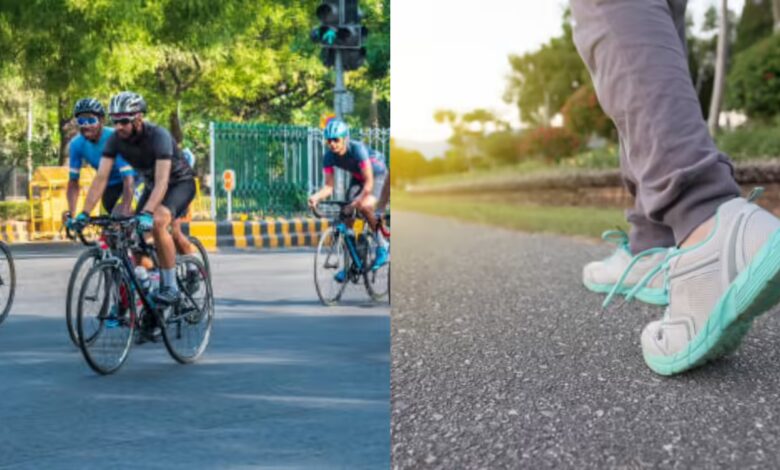
A growing body of research is now linking everyday physical activity with one of the biggest global concerns climate change. Experts say simple habits like walking and cycling are not just good for personal fitness but can also significantly reduce environmental damage when adopted widely.
A recent study developed by researchers at Auckland University of Technology has drawn attention worldwide. Their model exploring the connection between physical activity and environmental impact suggests that combining public health strategies with climate action could deliver benefits on both fronts. Instead of treating these as separate issues, scientists are urging governments and communities to approach them together.
The idea is simple but powerful. Replacing short car trips with walking or cycling can cut down carbon emissions while simultaneously improving heart health and overall fitness. As dependence on vehicles increases, emissions rise, which in turn worsens global warming. Encouraging active transport could help break this cycle.
However, the study also highlights challenges. Extreme weather conditions linked to climate change such as heatwaves and floods are making it harder for people to engage in outdoor activities. This creates a loop where reduced physical activity leads to more vehicle usage, further increasing environmental stress.


Policy gaps remain another concern. Researchers reviewed hundreds of national policies across nearly 200 countries and found that while many governments promote physical activity on paper, actual implementation is limited. Only a fraction of these policies effectively coordinate across different sectors, which weakens their impact.
Social inequality is also evident in access to physical activity. Data from dozens of countries shows that people in wealthier regions, especially men, have more opportunities to engage in exercise. Meanwhile, women in lower income regions face significantly fewer opportunities, despite often being involved in physically demanding daily work.
Experts emphasize that promoting walking, cycling, and public transport is not just a health initiative but also an environmental responsibility. Expanding safe infrastructure, improving urban planning, and encouraging behavioral change can make a real difference.
The findings underline a broader message small daily choices can collectively create a meaningful impact. By integrating physical activity into everyday routines, individuals can contribute not only to their own wellbeing but also to a more sustainable future.