

Doctors Warn Office Workers About Hidden Dehydration Risk Inside Air Conditioned Workspaces
Health experts say employees working long hours in air conditioned offices may face silent dehydration risks, even without feeling thirsty, leading to fatigue, poor concentration, and kidney related complications.
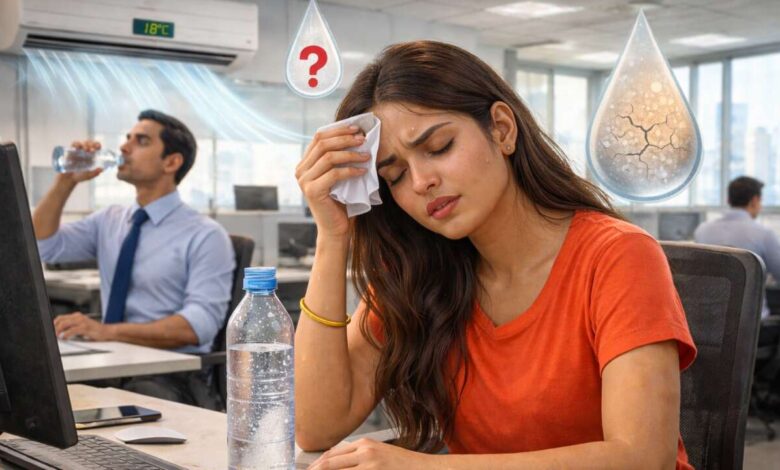
Many people believe dehydration is mainly a problem for those working outdoors under the hot sun. However, medical experts are now warning that employees spending long hours inside air conditioned offices may actually face a higher risk without even realizing it.
Doctors explain that dehydration inside office spaces often goes unnoticed because people do not feel sweaty or physically exhausted the way they do in hot weather. In air conditioned environments, the body loses moisture gradually, but the brain may fail to send strong thirst signals. As a result, many office workers continue their day without drinking enough water.
Health specialists say air conditioners reduce humidity levels in indoor spaces, creating dry air that slowly pulls moisture from the body through the skin and breathing. This process, known as invisible water loss, happens silently throughout the day. Since there are no obvious warning signs initially, many people fail to understand that their body is becoming dehydrated.
Doctors from leading hospitals in Hyderabad have pointed out that this issue is becoming increasingly common among IT employees and professionals who spend most of their working hours in closed office environments. They say many workers confuse dehydration symptoms with work related stress or mental fatigue.


Common signs of dehydration can include mild headaches, low energy levels, reduced concentration, dry skin, burning eyes, and dark yellow urine. Experts warn that ignoring these symptoms for long periods may eventually affect kidney function and overall health.
Medical professionals also note that many employees rely heavily on tea and coffee during office hours to stay active. While people often assume these beverages help maintain hydration, experts say excessive caffeine may actually worsen the situation. Drinks containing high amounts of caffeine can work as diuretics, which increase fluid loss through urination and contribute to dehydration instead of preventing it.
Doctors say chronic dehydration may increase the risk of kidney stones, urinary tract infections, constipation, and other health complications over time. Reduced water intake can also impact focus, productivity, and physical well being during long working hours.
Health experts recommend building a regular water drinking habit rather than waiting until thirst appears. They advise office workers to keep a water bottle nearby throughout the day and set reminders to drink water every hour. Small lifestyle adjustments can significantly reduce dehydration risks.
Specialists also encourage people to replace frequent tea or coffee consumption with healthier alternatives such as buttermilk, coconut water, or lemon water. These drinks can help maintain hydration levels more effectively, especially during long office shifts.
Taking short breaks during work hours is another important suggestion from doctors. Standing up, stretching, or walking briefly every hour can improve blood circulation and help the body respond better to its natural hydration signals.
Experts say air conditioning may provide comfort and improve workplace productivity, but it cannot replace the body’s need for water. Even when thirst is not noticeable, maintaining proper hydration remains essential for both physical and mental health.