

Union Budget 2026 Brings Major Duty Cuts and Broad Relief Across Key Sectors
Union Budget 2026 introduces wide ranging customs duty reductions, tax relief measures, and sector focused incentives, aiming to lower import costs, support businesses, ease compliance, and boost employment generation nationwide.
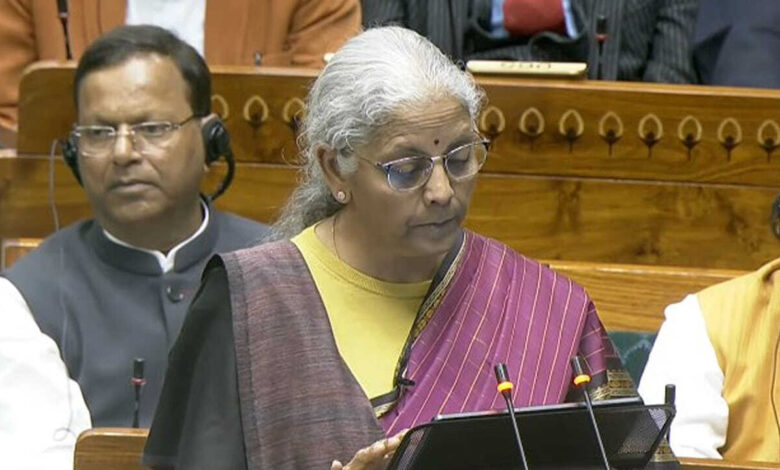
The Union Budget 2026, presented by Finance Minister Nirmala Sitharaman on February 1, outlined a series of policy decisions focused on easing costs, encouraging manufacturing, and supporting economic activity. The budget speech, delivered over nearly eighty minutes, highlighted multiple reforms aimed at both consumers and businesses.
One of the major announcements was the reduction in customs duties on several imported goods. The government lowered the customs duty on items imported for personal use from twenty percent to ten percent, extending the reduced rate to all dutiable goods. This move is expected to make imported products more affordable and reduce overall tax burden on consumers.
The budget placed strong emphasis on clean energy and manufacturing. Customs duty on sodium antimonate, a key input used in solar glass production, has been reduced. Several components required for lithium ion battery manufacturing have been exempted from duty, while customs duty has also been lowered on materials used for battery energy storage. These measures are aimed at strengthening domestic production in renewable energy and electric mobility sectors.
Export oriented industries also received attention. The government announced an expansion of duty free import limits for specific inputs used in processing marine products meant for exports. The permissible limit has been increased from one percent to three percent of export turnover value, with the benefit extended to leather and synthetic footwear exports as well.


In aviation, customs duty exemption has been granted on parts used in aircraft manufacturing, supporting domestic aerospace development. The budget also proposed reducing the tax collected at source on foreign education and medical expenses from five percent to two percent, offering relief to families spending abroad for essential needs.
Several compliance and tax related changes were introduced. Individuals failing to disclose foreign assets with past income below twenty lakh rupees will not face penalties, except in cases involving minor violations. The deadline for filing income tax returns has been extended till March 31, and an automated system has been proposed to simplify processes for small taxpayers.
Further relief measures include the removal of tax deduction at source on motor accident compensation claims. The government also announced plans to establish trauma care centers in district hospitals across the country, improving emergency healthcare access.
Social welfare initiatives featured prominently, including the launch of the Divyang Sahara Yojana to ensure faster and better access to assistive devices for persons with disabilities. Additionally, special training will be provided to one hundred fifty thousand caregivers for senior citizens, creating employment opportunities while addressing elder care needs.
To support entrepreneurship, the budget introduced a dedicated fund of ten thousand crore rupees for small traders. New mechanisms were also announced to make loans more accessible for micro, small, and medium enterprises, strengthening credit flow and encouraging business growth.