

Government Deactivates Crores of Aadhaar Numbers in Major Push Against Identity Fraud
Government disables over 2.5 crore Aadhaar numbers linked to deceased citizens, aiming to curb identity fraud, clean databases, strengthen security, and ensure welfare benefits reach only genuine, living beneficiaries nationwide.
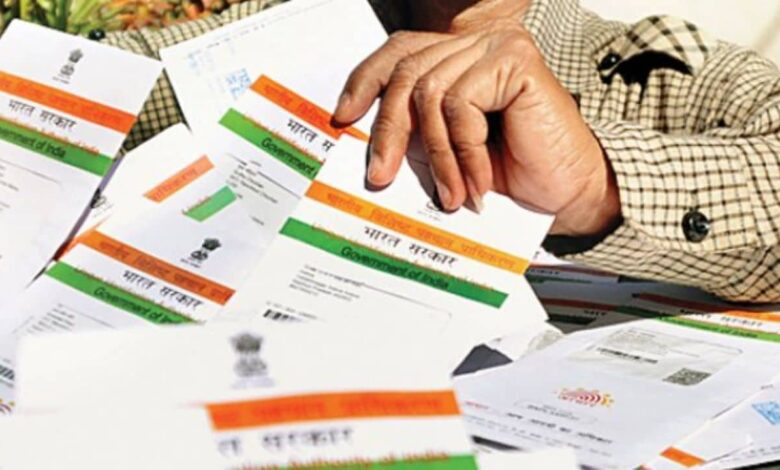
In one of the largest data clean up exercises linked to India’s digital identity system, the central government has deactivated more than 2.5 crore Aadhaar numbers belonging to deceased individuals. The move is aimed at tightening safeguards around public welfare delivery and reducing the misuse of identity documents.
The decision was disclosed in Parliament, where the Ministry of Electronics and Information Technology underlined that maintaining the accuracy of Aadhaar records is an ongoing responsibility. With millions of new Aadhaar numbers issued every year and a significant number of deaths recorded across the country, regular updates are critical to prevent outdated or invalid identities from remaining active.
Officials explained that an active Aadhaar number after a person’s death can become an easy target for fraud. In several reported cases, such identities were allegedly used to illegally claim pensions, subsidies, and other government benefits. By disabling these Aadhaar numbers, authorities aim to close loopholes that allow such misuse and ensure that public funds are not diverted away from rightful beneficiaries.
India currently has around 134 crore active Aadhaar holders, making it the world’s largest biometric identification system. Managing such a vast database comes with challenges, especially when death registrations do not always occur at the same location as the address mentioned in the Aadhaar record. This mismatch can delay verification and updating of records, officials noted.


To address these gaps, the government has been pushing for stronger coordination between departments responsible for civil registration, welfare schemes, and digital identity management. Data sharing mechanisms are being improved so that information about deaths reaches Aadhaar authorities in a timely manner, reducing the chances of dormant records remaining active.
Alongside database clean up, several technology driven security measures have been rolled out to protect Aadhaar from misuse. These include biometric lock and unlock options, allowing citizens to control when their fingerprints or iris data can be used. Another key addition is liveliness detection in face authentication, designed to prevent fraud using static photos or recorded videos.
Authorities have also tightened rules for organizations that use Aadhaar for verification. Such entities are now required to store identity information only in encrypted Aadhaar data vaults. The Unique Identification Authority of India has reiterated that citizens’ biometric data is not shared with third parties, addressing long standing privacy concerns.
A notable update is the introduction of a feature in the Aadhaar mobile application that allows family members to report the death of a relative. Once verified, the Aadhaar number of the deceased individual is disabled, helping speed up the process and reduce administrative delays.
Government officials say these steps are part of a broader effort to make welfare delivery more transparent and targeted. By ensuring that only living and eligible citizens are linked to benefits, the system becomes more reliable and public trust in digital governance improves.
As India continues to rely heavily on Aadhaar for everything from banking to social schemes, authorities maintain that regular audits, technology upgrades, and timely data updates will remain essential. The latest deactivation drive, they say, is not a one time action but a reminder that digital systems must constantly evolve to stay secure and credible.