

Indian Students Face Rising Racism in Russia Amid Surge in Complaints
Growing racial discrimination against Indian students in Russia has triggered serious concern, with official data showing a sharp rise in complaints, safety fears and reluctance among students to choose Russia for studies.
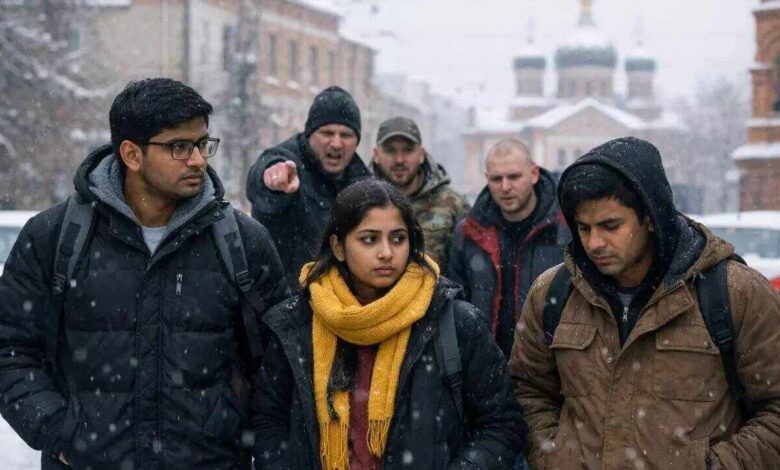
- Racial discrimination complaints from Indian students in Russia have increased sharply in recent years.
- More than half of global student complaints in 2025 originated from Russia alone.
- Safety fears are forcing students to look for alternative countries for higher education.
Reports of racial attacks against Indian students in Russia are increasing, raising alarm among families and authorities in India. A recent stabbing incident involving four Indian students in the city of Ufa has once again highlighted the growing safety concerns faced by students studying there.
Government data shows that complaints from Indian students in Russia now form the largest share of such cases worldwide. In 2025 alone, about 201 complaints were received from Russia, out of nearly 350 complaints reported globally. This marks a steep rise compared to previous years, reflecting a worsening situation.
Despite low tuition fees and easier admission processes that attract students from Telangana, Andhra Pradesh, Rajasthan and Gujarat, many students report facing racial abuse, harassment and mental stress. Fear of visa issues or expulsion often prevents them from speaking out, according to student groups.
Foreign medical graduate associations have also alleged that some universities admit more students than permitted and later remove them using technical reasons, leaving students distressed and financially strained.

Security concerns have intensified after the Russia – Ukraine war, prompting many Indian students to reconsider Russia as a study destination. Countries such as Kazakhstan and Kyrgyzstan are now being viewed as safer alternatives.
Although Indian embassies assure support, incidents like the Ufa attack underline the gap between assurances and ground realities. The rising complaints have sparked debate on student safety abroad and the need for stronger protection mechanisms.