New Labour Codes Bring Major Changes to Work Hours Salary and Overtime Rules
The Centre has fully implemented four new labour codes introducing changes in salaries, overtime pay, work hours, social security benefits, and employee protections across India.
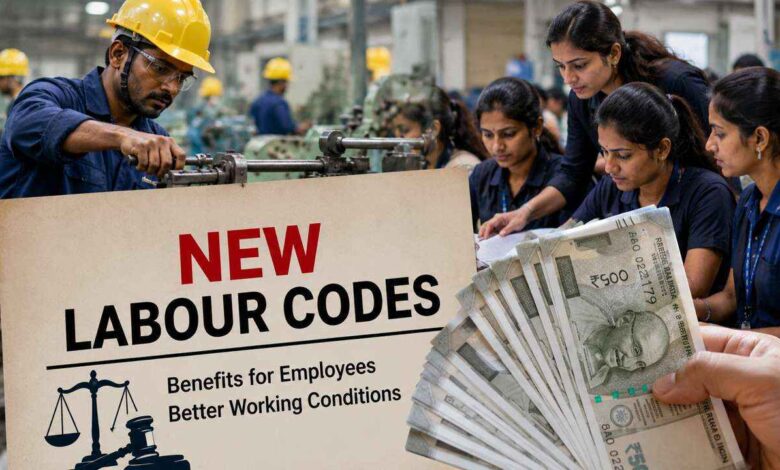
- New Labour Codes change salary structure
- 48 hour work week rule introduced
- Overtime payment and weekly off made mandatory
The Central government has officially enforced four major labour codes across the country, bringing sweeping changes to employee salaries, working hours, overtime rules, and workplace benefits. The move is being described as one of the biggest labour reforms in recent years.
The newly implemented labour framework combines 29 older labour laws into four simplified codes aimed at improving transparency, employee protection, and ease of compliance for companies. Officials said the detailed implementation rules have now been notified after extensive consultations with stakeholders.
Under the new rules, employees can work a maximum of 48 hours per week. Companies will also be required to provide at least one mandatory weekly off for workers. If employees work beyond the prescribed hours, employers must pay full overtime wages according to the updated regulations.
The four laws include the Code on Wages 2019, Industrial Relations Code 2020, Social Security Code 2020, and Occupational Safety Health and Working Conditions Code 2020. Although the codes were introduced earlier, full implementation was delayed until operational rules were finalised.


One of the most discussed changes is the restructuring of salaries. The new wage rules require at least 50 percent of an employee’s salary to be treated as basic pay along with dearness allowance. This may slightly reduce take home monthly salary because contributions towards PF and gratuity could increase. However, employees are expected to benefit from higher retirement savings in the long run.
The labour reforms also make written appointment letters mandatory for every employee, increasing transparency in hiring practices. In addition, workers aged 40 years and above may receive free health checkups under the updated provisions.
Women employees are also expected to benefit from stronger workplace protections and equal pay opportunities under the new system. The rules promote equal wages for equal work and ensure equal rights for women working in different shifts and sectors.
The government has also proposed support measures for workers who lose jobs by creating a national skill redevelopment fund. The initiative aims to provide retraining and improve future employment opportunities for affected workers.
Officials believe the reforms will help create a more worker friendly and growth oriented labour system while simplifying regulations for businesses operating across India.