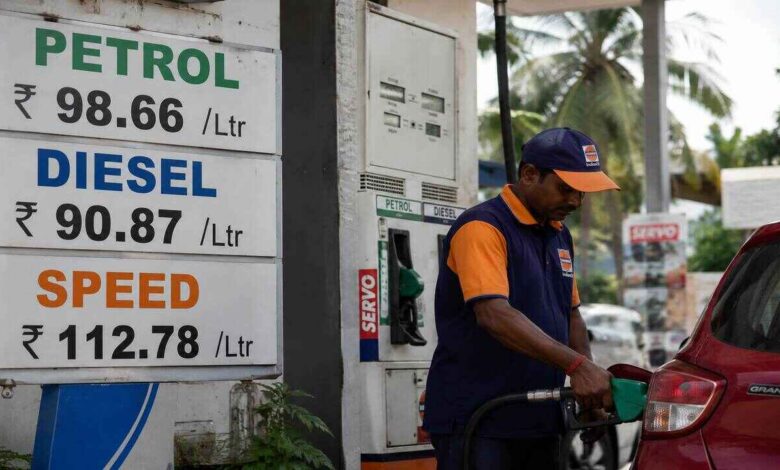
Vehicle owners across the country received another shock after fuel prices increased once again within just a few days. Public sector oil marketing companies revised petrol and diesel prices upward on Tuesday, adding further pressure on household budgets already affected by inflation.
According to the latest revision, petrol prices increased by around eighty six paise per litre while diesel became costlier by nearly eighty three paise. This marks the second fuel price hike within a week. Last Friday, oil companies had already raised fuel prices by almost three rupees per litre, resulting in a total increase of nearly four rupees in just four days.
Industry experts say the sharp rise is mainly linked to instability in the international crude oil market. Increasing geopolitical tensions in West Asia and continued uncertainty involving the United States and Iran have pushed global crude oil prices higher in recent days.
Concerns over possible supply disruptions near the Strait of Hormuz reportedly pushed crude oil prices beyond one hundred dollars per barrel in international markets. As a result, Indian refining companies are facing mounting import costs and financial pressure.
Market analysts believe the latest revision is aimed at reducing the gap between import expenses and retail fuel prices. Experts also warned that if global tensions continue for a longer period, fuel prices may rise further in the coming weeks.
The revised fuel rates in major cities have also drawn attention. Petrol prices in Delhi crossed ninety eight rupees per litre while diesel prices moved above ninety one rupees. Mumbai, Kolkata, and Chennai also recorded significant increases in both petrol and diesel rates.
Economists warn that rising diesel prices could directly affect transportation costs and increase the prices of vegetables, fruits, and other essential commodities. Higher fuel costs are expected to place additional pressure on retail inflation and monthly household expenses across the country.
With transportation and logistics becoming more expensive, common families may soon feel the impact not only at fuel stations but also in everyday living costs.