

Sam Altman Says AI Is Changing Work But Not Replacing Humans Completely
OpenAI CEO Sam Altman says artificial intelligence is improving productivity across industries while human creativity decision making and emotional understanding continue to remain essential in modern workplaces worldwide today
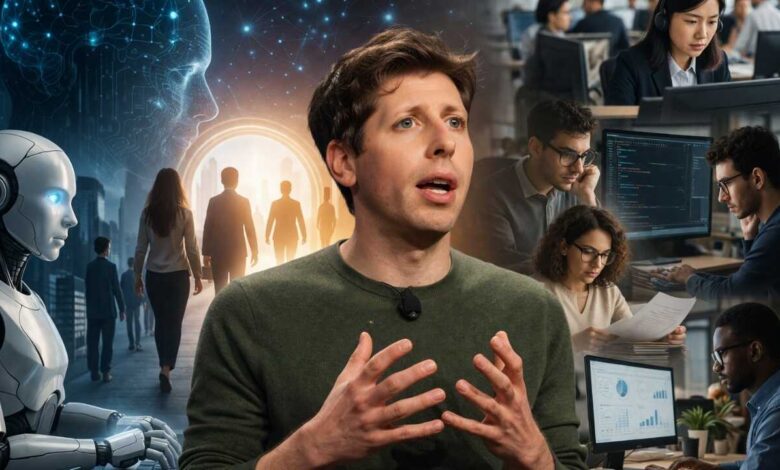
The rapid rise of artificial intelligence has sparked fears around the world about the future of jobs. Since tools like ChatGPT entered mainstream use, many people began wondering whether machines would eventually replace human workers across industries. Concerns grew especially in areas such as content writing, customer support, coding and data entry, where AI tools can already complete several tasks within seconds.
However, OpenAI Chief Executive Officer Sam Altman has now offered a more balanced perspective on the issue. According to him, artificial intelligence has certainly changed the way people work, but it has not led to the massive wave of job losses many had predicted earlier. He explained that companies are currently using AI mainly to improve efficiency and support employees rather than completely remove human involvement from workplaces.
Altman believes AI should be seen as a productivity tool instead of a direct replacement for workers. In recent years, employees across offices, schools and businesses have started relying on AI for everyday activities such as writing emails, preparing presentations, researching information and fixing coding errors. This shift has made several tasks faster and more convenient, helping teams save time and improve workflow.
At the same time, he acknowledged that the nature of many jobs may continue to evolve in the coming years. Repetitive tasks that follow fixed patterns are more likely to be automated through AI systems. Because of this, some traditional job roles could gradually shrink or transform. Still, Altman emphasized that new opportunities and career categories are also expected to emerge as AI adoption expands across industries.


Experts say the biggest challenge for workers now is adapting to changing technology. Companies increasingly prefer employees who understand how to work alongside AI tools and use them effectively in daily operations. Technical knowledge alone may no longer be enough in future workplaces. Skills related to creativity, communication, critical thinking and problem solving are becoming equally important in the AI driven economy.
Another key point highlighted by Altman is that artificial intelligence still lacks many human qualities. While AI can process information quickly, it cannot fully replicate emotional understanding, human judgment or original creative thinking. Industries that depend heavily on empathy, leadership and complex decision making still require strong human participation. Because of this, many businesses are choosing a combined approach where AI handles repetitive processes while humans focus on strategic and creative responsibilities.
The discussion around AI and employment continues to grow globally as technology becomes more advanced every year. Yet Altman’s comments have provided some reassurance to people worried about losing jobs overnight. Industry observers believe the future workplace will likely involve closer collaboration between humans and intelligent systems rather than a complete takeover by machines.
For employees and students, the message is becoming increasingly clear. Learning new digital skills and understanding AI tools may soon become as important as traditional education. Instead of fearing technology, experts suggest that adapting to it could open doors to entirely new opportunities in the years ahead.