

Chicken Virus Outbreak Triggers Massive Poultry Deaths and Price Concerns in Telangana
A fast spreading chicken virus outbreak in Telangana is causing mass poultry deaths within hours raising alarm among farmers and consumers while pushing chicken prices higher in affected regions.
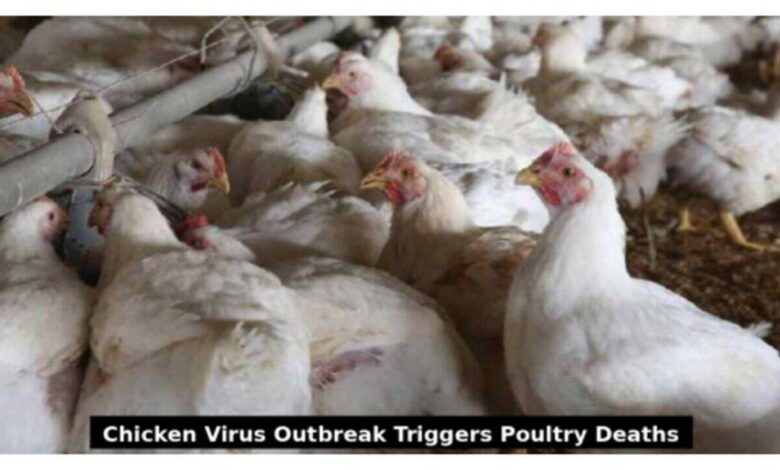
- Chicken virus outbreak causes mass poultry deaths.
- Poultry deaths raise chicken price concerns.
- Chicken virus spreads rapidly across farms.
A sudden outbreak of a fast spreading chicken virus has created panic among poultry farmers in Telangana, with reports of thousands of birds dying within hours across multiple districts.
The situation has become particularly severe in regions such as Medak, Sangareddy and Siddipet, where farmers say even healthy birds are collapsing unexpectedly. In one incident reported from a village in Siddipet district, nearly eight thousand chickens died in a single farm, highlighting the intensity of the outbreak.
According to experts, the disease spreads extremely quickly from one bird to another, leaving little to no time for treatment. Farmers have expressed concern that the infection often shows minimal warning signs, making it difficult to control once it begins spreading within a farm.
In Medak district alone, tens of thousands of chickens have reportedly died across several mandals, leading to heavy financial losses for poultry operators who have invested significantly in their farms.


The virus, scientifically known as Ranikhet disease, is believed to spread primarily through air and infected birds, including smaller carriers like sparrows. Sudden changes in temperature are also being cited as a contributing factor to the rapid spread.
As poultry farms struggle with rising losses, the impact is beginning to reflect in the market. Chicken prices have already surged, crossing high levels in recent weeks. With supply expected to tighten further due to the outbreak, prices may rise even more in the coming months.
While there is no immediate cure to stop the spread entirely, experts suggest that preventive measures and better farm management practices can help reduce the risk. Authorities are closely monitoring the situation as both farmers and consumers remain on alert.