AI Could Soon Be a Pay As You Use Service, Says OpenAI Chief Sam Altman
OpenAI chief Sam Altman says artificial intelligence could soon function like a basic service where people simply use it when needed and pay only for the computing power consumed.
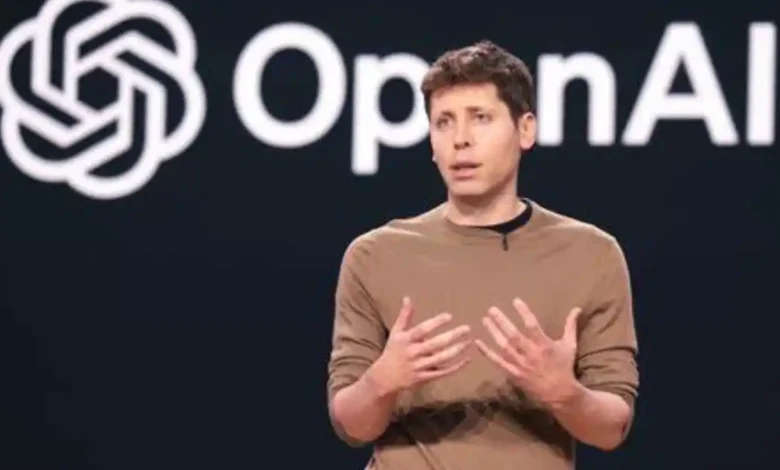
Artificial intelligence is often described as a revolutionary technology that could reshape industries, education and the way people work. However, OpenAI chief Sam Altman believes the future of AI might be far simpler than many imagine. Instead of being treated as a complex innovation, he says AI could gradually become a basic service that people rely on daily, much like electricity or water.
Speaking at the BlackRock US Infrastructure Summit in Washington DC, Altman explained that users may eventually stop thinking about AI as a special technology. Instead, they will simply use it whenever they need assistance with a task. In such a future, people would pay for AI in the same way they pay their monthly utility bills.
Altman described a model where intelligence powered by AI could be purchased through a metered system. Rather than paying a fixed subscription for access, users might pay based on how much computing power they actually consume. In simple terms, the more AI they use, the more they would pay, similar to how electricity and water consumption are billed today.
According to him, the shift toward this model could make AI widely accessible while also allowing users to control their costs. The goal is to transform advanced computing into a practical service that people can easily tap into whenever required for writing, research, problem solving or creative work.


Altman also pointed out how rapidly AI tools are becoming part of everyday professional life. In many companies, systems powered by artificial intelligence are already handling tasks that once required hours of manual effort. Software development is one of the clearest examples, where AI tools can now generate and review code that engineers previously had to write themselves.
The role of employees is also evolving. Instead of spending most of their time performing technical tasks directly, some workers now focus more on guiding AI systems and supervising their output. Altman believes this pattern could become increasingly common in the coming years as AI capabilities improve.
At present, many AI tools can complete tasks that typically take a few hours for a human. Altman expects that future systems will be able to handle much larger projects that may require several days or even weeks of work. As these capabilities grow, the technology could become an essential partner in research, science and other knowledge based fields.
Altman shared that he personally uses AI tools in his own work as well. When he has ideas for potential products or business strategies, he often asks AI systems for feedback before discussing them with colleagues. As these tools gain access to more internal information and documentation, he believes their responses will become even more useful and relevant.
Behind this vision, however, lies an enormous technological foundation. Running advanced AI models requires large data centers filled with specialized hardware and supported by vast amounts of electricity. Altman described these facilities as large campuses where thousands of workers manage and maintain the computing systems that power AI.
To meet the growing demand, OpenAI is investing heavily in computing infrastructure alongside major partners such as Amazon, Nvidia and SoftBank. These collaborations aim to expand the capacity needed to support future AI services on a global scale.
Altman says the broader objective is clear. Artificial intelligence should not remain a costly tool used only by a few large companies. Instead, it should become widely available so that individuals, businesses and organizations of all sizes can benefit from it.
If this vision becomes reality, future generations may not see AI as a remarkable breakthrough at all. It will simply be a part of everyday life, quietly assisting people with writing, learning, building products and solving problems whenever they need help. And just like electricity or water, users will pay for it according to how much they use.