AI Revolution Sparks Fears as Millions of Traditional Jobs Face Uncertain Future
Global companies are accelerating AI adoption to cut costs and boost efficiency, with projections warning that automation could disrupt or eliminate 92 million roles worldwide by 2030.
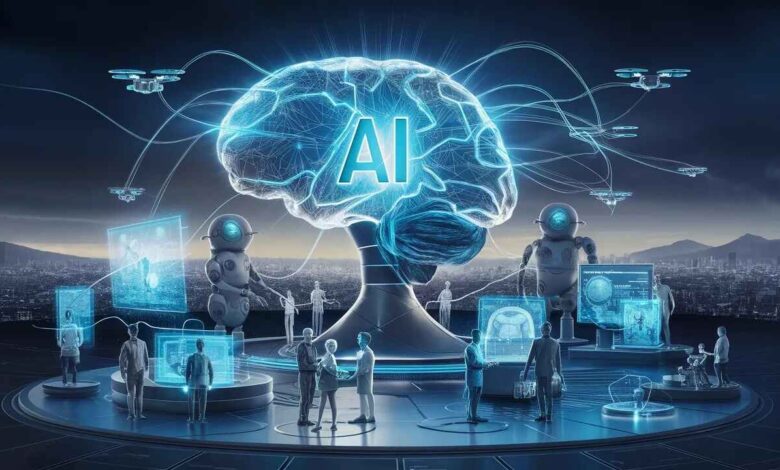
Artificial intelligence is no longer a distant concept discussed only in tech circles. It is now reshaping offices, call centers, retail stores and even creative studios. As companies race to automate routine tasks and improve efficiency, millions of workers are beginning to wonder whether their roles will survive the next wave of digital transformation.
According to projections from the World Economic Forum, nearly 92 million jobs could be disrupted or displaced globally by 2030 due to AI and automation. While new opportunities are expected to emerge, several existing roles are already showing signs of decline. Here are ten professions experts say face the highest risk.
Customer support executives are among the most exposed. AI driven chatbots and voice assistants are now handling a large share of banking, ecommerce and telecom queries. Industry estimates suggest that by the end of 2026, up to 75 percent of routine customer interactions could be managed without human intervention.
Retail employment is also changing rapidly. Self checkout kiosks and AI powered store systems are reducing the need for cashiers and floor sales staff. Large chains are investing heavily in automated billing and inventory tools, quietly shrinking frontline roles.


Basic IT support jobs, especially entry level helpdesk positions, are being automated as well. Modern AI systems can detect technical faults, suggest fixes and even execute solutions without waiting for a technician. Tier one support roles are gradually being absorbed by intelligent software.
In the corporate back office, administrative assistants are seeing their responsibilities transformed. Meeting scheduling, inbox sorting and document organization are increasingly handled by AI assistants that operate around the clock without breaks.
Entry level accounting and bookkeeping roles are also vulnerable. Tasks such as invoice generation, payroll processing and tax calculations are now performed by specialized AI driven platforms. What once required a small team can now be managed by a single professional overseeing automated systems.
Telemarketing is another sector undergoing a quiet overhaul. Smart auto dialers and AI voice bots can reach thousands of customers simultaneously, delivering scripted pitches and collecting responses with minimal human supervision. Traditional sales calling roles are steadily declining.
Data entry operators may face one of the fastest transitions. Optical character recognition and automated data management systems can copy, update and verify records within seconds, often with fewer errors than manual processing. Companies seeking speed and accuracy are quickly adopting these tools.
Content creation at the basic level is also being reshaped. AI platforms can produce search optimized articles, product descriptions and short news updates almost instantly. While experienced writers remain valuable for analysis and storytelling, template driven writing jobs are becoming harder to find.
Even creative fields are feeling pressure. Junior graphic designers who focus on template based work are competing with AI design tools capable of generating logos, posters and social media visuals in minutes. Businesses looking for quick turnaround and lower costs are increasingly turning to automated design solutions.
Language professionals are not immune either. Advanced translation software can now interpret and convert multiple languages in real time. A study highlighted by Microsoft placed translation and interpretation roles in a higher risk category as AI models continue to improve accuracy.
Experts caution that while automation may reduce certain roles, it will also create demand for new skills in AI management, data analysis and creative problem solving. The real challenge for workers is not whether change is coming, but how quickly they can adapt.
For many employees, the message is clear. Routine and repetitive tasks are most at risk. Developing specialized expertise, critical thinking abilities and digital skills may be the best defense in an era where machines are learning to do more every day.