

Fake Income Tax Emails Trigger Major Cybersecurity Alert Experts Warn Users Against Opening Suspicious Attachments
Cybersecurity researchers have warned taxpayers and businesses to stay alert as fake income tax emails disguised as official government notices are spreading rapidly and targeting users across multiple countries
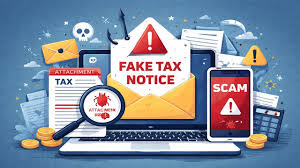
As tax filing activity increases, cybercriminals are using fake Income Tax related emails to trick people into downloading dangerous files. Security experts say these phishing campaigns closely imitate official communication from tax authorities, making them difficult for ordinary users to identify at first glance
According to cybersecurity researchers, a large wave of malicious emails was first detected targeting Indian users in late 2025. Similar attacks later expanded to countries including Indonesia, Russia and South Africa. The emails were designed to look like tax audit notices or warnings about alleged tax violations in order to pressure recipients into opening attachments
Investigators say the attackers used archive files claiming to contain lists of tax violations or important financial documents. Once users downloaded and opened these files, malicious software was silently installed on their systems. This allowed hackers to gain remote access to infected devices and potentially steal sensitive personal or financial information
Cybersecurity firm researchers linked the campaign to a threat group known as Silver Fox. Experts noted that the structure and style of the phishing emails remained almost identical across different countries. The attackers reportedly used modified software loaders to install advanced malware capable of spying on devices and maintaining long term access


During their investigation, researchers also discovered a previously unknown Python based backdoor malware that has been named ABCDoor. Experts believe this tool has been actively used in cyberattacks since at least late 2024. Once installed, the malware can help attackers monitor systems, collect data and execute commands remotely without the victim realizing it
The threat has especially raised concerns for companies working in industrial consulting trade and transportation sectors. Reports indicate that more than 1600 malicious emails were detected within just two months during one phase of the campaign. Security experts warn that individuals filing taxes from personal devices could also become easy targets if they fail to verify email authenticity carefully
Experts are strongly advising users to avoid downloading files or clicking links from suspicious emails claiming to come from tax departments. Users should always verify sender addresses carefully and access tax related services only through official government websites
Cybersecurity professionals also recommend using updated security software that can detect phishing attempts and scan compressed attachments automatically. Regular software updates, strong passwords and improved digital awareness can significantly reduce the risk of falling victim to such scams
With online financial activity continuing to grow, experts say phishing attacks are becoming more sophisticated and emotionally manipulative. Staying cautious while handling tax related emails may help users avoid major financial loss and identity theft during the tax filing season