

Telangana Liquor Sales Surge with Record Beer Sales but Low Revenue Growth
Telangana liquor sales hit record levels in 2025 26 with beer sales rising sharply but government revenue sees minimal growth due to price cuts cheaper brands and reduced license fee collections
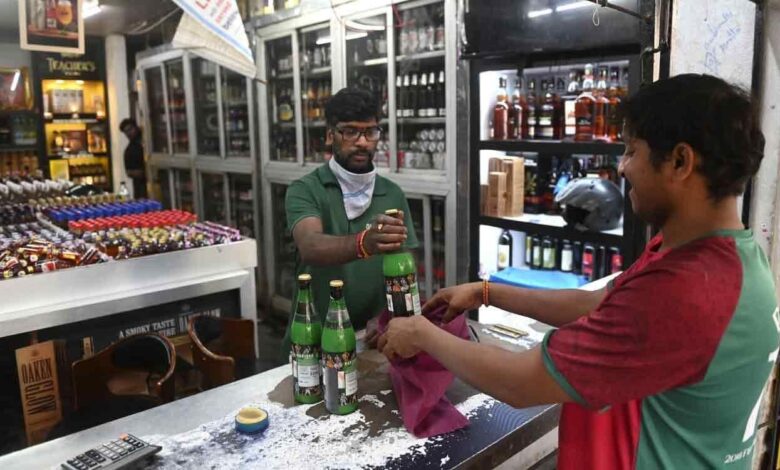
- Telangana liquor sales surge with record beer sales growth
- Telangana liquor sales revenue growth remains below one percent
- Telangana liquor sales impacted by cheap brands and price cuts
Telangana witnessed an unprecedented rise in liquor consumption during the financial year 2025 26, with beer sales leading the surge. Despite this sharp increase in overall sales, the growth in government revenue remained marginal, raising concerns within the excise department.
Beer consumption recorded a significant jump, increasing from 136 lakh cases in the previous year to 232 lakh cases, marking a growth of over 70 percent. Alongside this, Indian made liquor sales also rose steadily, pushing total alcohol consumption in the state to a record high.
In terms of total sales value, liquor transactions increased from 29440 crore to 31237 crore, reflecting a growth of over 6 percent. However, the actual revenue received by the government showed only a marginal rise of less than one percent, increasing from 28846 crore to 29042 crore.
Officials attribute this gap primarily to the growing preference for lower priced liquor. Sales of budget category bottles, especially the 99 priced 180 ml variants, saw a sharp rise. This shift in consumer behavior significantly reduced the overall revenue contribution despite higher volumes.


Another key factor was the reduction in prices of premium liquor brands, which further impacted revenue collections. The average price per bottle dropped noticeably, affecting the government’s earnings even as consumption increased.
Additionally, the absence of new liquor shop tenders this year resulted in a decline in non refundable license fee income. In the previous financial year, such tenders had generated substantial revenue, but their absence this time led to a drop of nearly 19 percent in that segment.
Experts have also raised concerns about the social impact of rising alcohol consumption. They stress the need for policies that not only focus on revenue but also address public health and responsible consumption.
The data highlights a complex situation where increased liquor sales have not translated into proportional financial gains for the state, prompting authorities to review existing policies and pricing strategies.