

Advanced AI Robots Bring New Capabilities to Military Operations
Advanced military robots equipped with artificial intelligence are being tested in real conflict zones, promising reduced human risk while raising concerns about autonomy, ethics, and the future of warfare
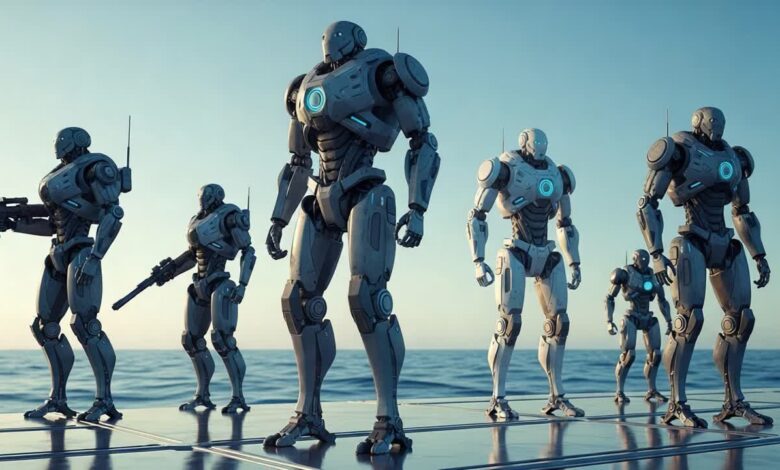
The idea of robots fighting alongside soldiers is no longer limited to science fiction. Recent developments suggest that artificial intelligence driven machines are steadily finding their way into real battlefields, changing how modern warfare is approached.
According to reports, a United States based startup, Foundation Robotics, has supplied humanoid robots known as Phantom MK 1 to Ukraine for military use. These machines are being explored for a variety of roles, ranging from reconnaissance missions to handling hazardous materials and even supporting combat operations.
Initially described as robotic scouts, the Phantom MK 1 units are capable of much more due to their design. Built to move like humans, they can navigate difficult terrain where traditional machines often struggle. Standing about 180 centimeters tall and weighing around 80 kilograms, the robot can carry loads of up to 20 kilograms while moving at speeds comparable to infantry soldiers.
The system is powered by electric actuators that allow smooth and natural limb movement. Multiple cameras mounted on the robot help it interpret its surroundings, detect light, and monitor nearby activity. What sets it apart is its integration of advanced artificial intelligence, enabling it to analyze battlefield conditions and make real time decisions such as choosing movement paths.


Despite this autonomy, experts emphasize that most military robots today operate under a human in the loop framework. This means AI assists with navigation, object detection, and tactical suggestions, but critical decisions especially those involving weapons remain under human control.
The use of robotics in military operations is expanding rapidly. Unmanned ground vehicles have already been widely deployed for tasks such as transporting supplies, evacuating injured soldiers, and conducting surveillance. Reports indicate that thousands of such missions have been carried out in recent months alone, highlighting their growing importance in support roles rather than direct combat.
However, the rise of humanoid robots brings both opportunities and challenges. Issues such as limited battery life, high production costs, and difficulty in handling unpredictable environments still remain. There are also serious concerns about cybersecurity risks and the potential misuse of such technologies if they fall into the wrong hands.
Foundation Robotics, founded by former military personnel and engineers specializing in defense systems, has already secured contracts worth millions of dollars with branches of the United States armed forces. This positions the company as a key player in the evolving defense technology landscape.
Globally, the race to develop advanced military robotics is intensifying. Countries like the United States, China, Israel, and Russia are actively investing in robotic systems for land, air, and sea operations. From robotic dogs tested in military drills to established systems like PackBot and TALON, automation is becoming a defining feature of future conflicts.
Experts believe that upcoming battlefields could involve coordinated networks of intelligent machines working alongside human forces. While the technology aims to reduce human risk and improve efficiency, it also signals a major shift in how wars may be fought in the years ahead.