

Blue Star vs Daikin AC Which Brand Delivers Better Cooling in Extreme Summer
As temperatures rise sharply across India, buyers compare Blue Star and Daikin air conditioners on cooling performance, energy efficiency, pricing, and features ahead of major online discounts and seasonal sales
With summer temperatures climbing across many parts of India, air conditioners are no longer a luxury but a necessity. As online platforms roll out seasonal discounts, buyers are carefully comparing brands to find the right balance between performance, cost, and long term savings. Two names dominating this discussion are Blue Star and Daikin, each offering distinct advantages for different types of users.
For households dealing with intense heat waves, Blue Star has positioned itself as a practical and reliable option. Designed with Indian weather conditions in mind, these air conditioners are built to perform even when temperatures soar close to 50 degrees Celsius. The brand focuses on fast cooling, and its turbo cooling feature is particularly useful for users who want immediate relief after stepping indoors.
At the same time, affordability plays a major role in Blue Star’s appeal. The company offers a wide range of models that cater to mid range budgets, making it accessible to a large segment of buyers. Features like convertible cooling modes allow users to adjust performance based on room occupancy, helping manage electricity consumption without compromising comfort.
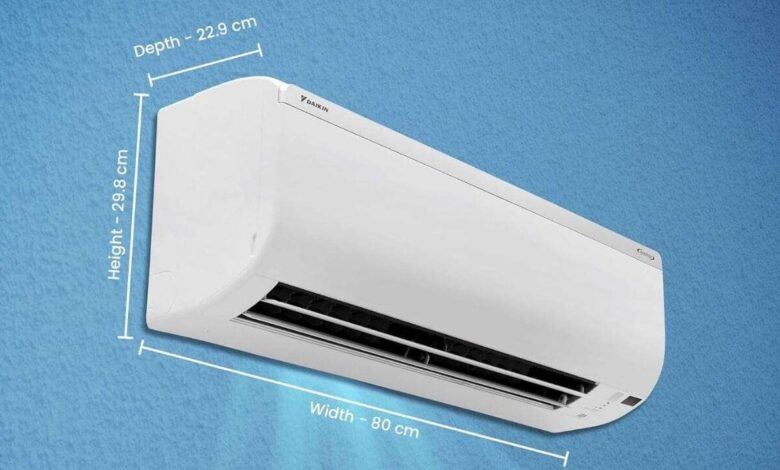
Daikin, on the other hand, takes a more premium approach by focusing on advanced technology and energy efficiency. Known globally for its air conditioning expertise, the Japanese brand emphasizes precision cooling and quieter operation. Its signature airflow design distributes cool air evenly across the room instead of directing it straight at occupants, creating a more comfortable indoor environment.


Energy savings are another area where Daikin stands out. Its inverter compressors are designed to reduce power consumption over time, making it an attractive option for users concerned about rising electricity bills. While the initial cost may be higher compared to competitors, many buyers view it as a long term investment due to durability and consistent performance.
The difference between the two brands also becomes clear in user experience. Blue Star models are often preferred for their strong and immediate cooling, especially in larger or poorly insulated spaces. Meanwhile, Daikin units are valued for their silent operation, making them suitable for bedrooms, home offices, and environments where noise can be a concern.
However, both brands come with trade offs. Blue Star units may produce slightly more noise at higher fan speeds, and some entry level models focus more on function than design. Daikin systems, while technologically advanced, can involve higher installation and maintenance costs, and spare parts may not always be as easily available in smaller markets.
Another key factor for buyers is service and support. Blue Star benefits from a widespread service network across India, which can be crucial during peak summer months. Daikin also offers strong after sales support, along with extended warranties on compressors, giving users added confidence in their purchase.
As discounts become available on platforms like Amazon, both brands are expected to attract significant attention. Ultimately, the choice depends on what buyers value more. Those seeking budget friendly cooling with strong performance may lean towards Blue Star, while those prioritizing energy efficiency, quieter operation, and advanced features are more likely to choose Daikin.
With heat waves becoming more frequent, investing in the right air conditioner is no longer just about comfort but also about efficiency and long term value.