
Google Unveils Powerful AI Future at I O 2026 With Smarter Search and Next Generation Digital Tools
Google showcased advanced AI tools at I O 2026 including Gemini powered search, smart glasses, AI assistants, and productivity upgrades designed to make daily digital tasks faster and easier.
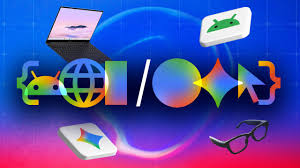
Google has placed artificial intelligence at the center of its future plans during the Google I O 2026 developer conference. The company introduced a series of AI driven products and upgrades that could completely change how people use smartphones, search engines, and productivity apps in daily life. From advanced AI assistants to smart glasses and upgraded search capabilities, the event highlighted Google’s ambition to lead the next generation of AI technology.
One of the most talked about announcements was Gemini 3.5 Flash, which Google described as its fastest and smartest AI model so far. The new model has been designed to handle coding, reasoning, and multimodal tasks with improved speed and accuracy. According to the company, Gemini 3.5 Flash will power several Google services including AI Search Mode, the Gemini app, and multiple developer tools. This upgrade is expected to make AI interactions smoother and more responsive for users.
Google also introduced Gemini Omni, a new AI system capable of understanding text, images, and videos together. This means users will no longer need to rely only on written prompts. They can now upload photos or videos and ask the AI to generate content, provide answers, or complete tasks based on visual information. The company has started rolling out the Gemini Omni Flash version, while a more advanced Pro version is expected later.
Search received one of the biggest transformations at the event. Google revealed a redesigned AI Search experience that can understand files, browser tabs, videos, and images in addition to text. Instead of simply showing links, the new system aims to provide direct answers and intelligent suggestions. Google stated that AI Mode has already reached more than one billion users, showing how rapidly AI based search is becoming part of everyday internet use.


YouTube users are also set to experience major improvements with the arrival of the Ask YouTube feature. This tool allows viewers to ask questions about the content playing inside a video. For example, if someone is watching a long tutorial or interview and wants information about a specific moment, the AI can instantly provide details without forcing users to search manually through the entire video.
Google expanded AI integration across Workspace applications as well. Gmail now includes smarter AI generated replies and voice based search options, while Google Docs has received a Docs Live feature that allows voice controlled editing. The company also introduced Gemini Spark, a digital assistant designed to help users manage daily activities more efficiently across Google services.
Another product that attracted significant attention during the event was the Android XR smart glasses. Google demonstrated how these AI powered glasses can support live translation, voice commands, and augmented reality features. The company believes these smart glasses could eventually handle many tasks currently done on smartphones, offering a more natural hands free digital experience.
Shopping experiences are also becoming more intelligent with Google’s new Universal Cart feature. Powered by AI, the system can help users compare products, find better deals, and purchase items across multiple websites and apps. Google confirmed that this feature will work across Search, YouTube, Gmail, and Gemini platforms, creating a connected shopping ecosystem.
For developers, Google announced new AI Studio tools and coding platforms aimed at simplifying app creation. The company claims developers will now be able to build Android applications using natural language instructions, potentially reducing development time and making software creation easier for beginners and professionals alike.
Language barriers were another focus area at the conference. Google showcased a live translation feature that can instantly translate conversations and video calls in real time. Users speaking different languages will be able to communicate more naturally as the AI converts speech into the listener’s preferred language almost immediately.
Google also demonstrated Project Astra, a next generation AI assistant designed to understand surroundings through camera input and voice interaction. The assistant can respond in real time, recognize objects, and even remember previous conversations to offer more human like communication. This project reflects Google’s larger vision of AI systems becoming more deeply integrated into everyday human activities.
With these announcements, Google made it clear that the competition is no longer limited to smartphones or apps alone. The company is now focusing on building a complete AI ecosystem where digital assistants, search engines, wearable devices, and productivity tools work together to automate tasks and improve the overall user experience.