Robot Dog Sparks Row at AI Summit as Imported Model Passed Off as Local Innovation
A Chinese made robotic dog showcased at Indias AI Impact Summit triggered controversy after being presented as indigenous. The advanced Unitree Go2 is commercially available for Indian buyers online
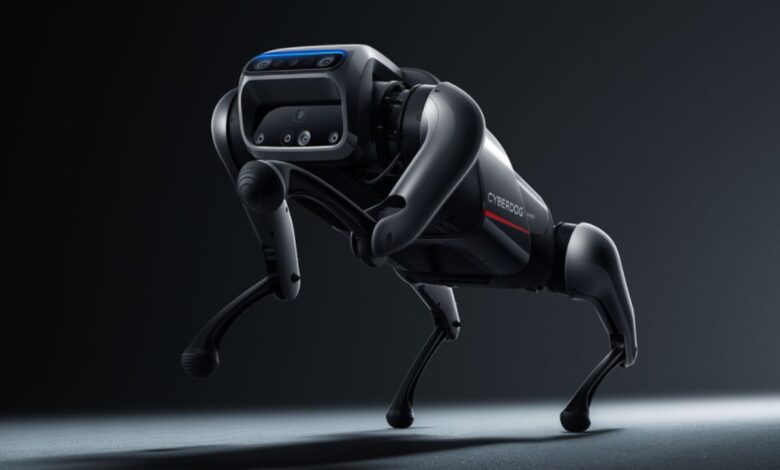
What began as a routine technology showcase at the AI Impact Summit in New Delhi quickly turned into a controversy that drew national attention. A robotic dog displayed at a university pavilion was introduced as an indigenous innovation named Orion. Within hours, it emerged that the machine was in fact the commercially available Unitree Go2 developed by Chinese firm Unitree Robotics.
The summit, held in the capital city of New Delhi, was meant to highlight India’s growing footprint in artificial intelligence. Instead, the spotlight shifted to questions of authenticity and transparency. Organizers later asked the concerned university to vacate its pavilion after the clarification surfaced.
Beyond the controversy, the robotic dog itself represents a significant leap in consumer robotics. The four legged AI powered machine is designed to walk, run and maintain balance much like a real dog. Equipped with advanced sensors and a 4D LiDAR system, it can scan its surroundings in 360 degrees, detect obstacles and adjust its movement in real time. Its artificial intelligence algorithms allow it to choose paths independently and adapt to uneven terrain, slopes and even stairs.
Weighing roughly 15 kilograms, the robot is built for both agility and endurance. Depending on the variant, it offers a battery life ranging from two to four hours. Connectivity options include WiFi Bluetooth and 4G support, enabling users to operate it remotely through a mobile application. Software updates can be delivered over the air, ensuring the system stays current without physical upgrades.


The device is not limited to demonstration purposes. Educational institutions and research centers are already using it to train students in robotics and artificial intelligence. In industrial settings, it can assist with inspection tasks, surveillance and monitoring in areas that may be risky for humans. Experts believe such robotic systems could eventually play roles in security operations crisis response and smart city infrastructure.
Interestingly, the robotic dog at the center of the debate is not a restricted prototype. It is mass produced and available for purchase. In India, buyers can order different variants through authorized sellers and online platforms, with prices typically starting in the range of several lakh rupees. Some vendors even offer local inventory delivery options along with warranty support.
The episode has sparked broader discussions about innovation claims and the importance of crediting original developers. At the same time, it has drawn attention to how accessible advanced robotics technology has become. What was once confined to research labs is now only a few clicks away for consumers willing to invest.
As artificial intelligence continues to shape industries and everyday life, the incident serves as a reminder that transparency matters as much as technological progress.