
Smart Cooling Push Gains Momentum as 7 in 1 Convertible ACs See Surge in Demand Online
Heavy discounts and advanced cooling technologies drive buyers toward energy efficient air conditioners that promise uniform cooling, durability, and performance even in extreme Indian summer conditions
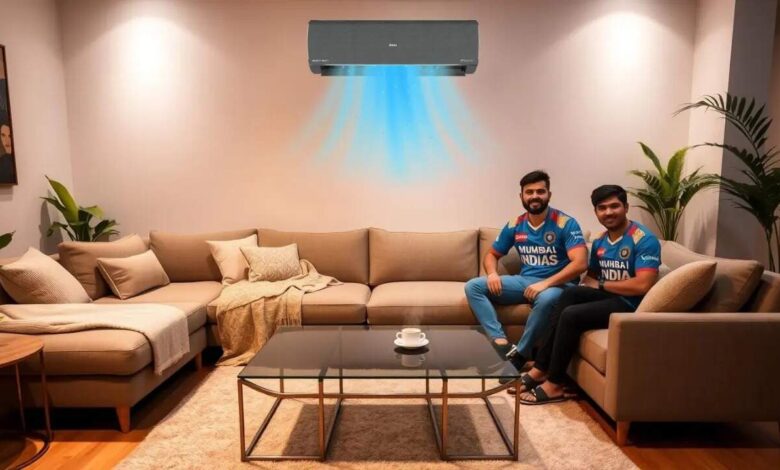
With temperatures climbing to extreme levels across the country, demand for high performance air conditioners has sharply increased, especially on major e commerce platforms. Recent listings highlight a strong consumer shift toward advanced split ACs equipped with 7 in 1 convertible modes, four way air swing, and durable copper condensers. These features are increasingly seen as essential rather than premium, particularly in regions facing prolonged heatwaves.
Manufacturers are responding with models designed to operate efficiently even when outdoor temperatures cross 54 to 60 degrees Celsius. Brands are focusing on combining durability with smart energy management, ensuring that users get fast cooling without a significant spike in electricity bills. The use of 100 percent copper coils has become a key selling point due to their longer lifespan, resistance to corrosion, and superior heat transfer capabilities compared to aluminum alternatives.
A standout trend in the market is the integration of intelligent inverter compressors paired with AI based cooling modes. These systems automatically adjust cooling capacity depending on room occupancy and external heat conditions, typically ranging between 40 percent and 110 percent output. This flexibility allows users to balance comfort with energy savings, making these units practical for both peak summers and moderate weather.
Among the widely discussed options is a compact one ton split AC equipped with Triple Inverter Plus technology. Designed for smaller rooms, it offers rapid cooling while maintaining energy efficiency. Its 7 in 1 convertible functionality allows users to fine tune cooling levels, and it is built to perform even under extreme temperatures close to 60 degrees Celsius. Features such as frost self cleaning and antibacterial filters further enhance usability and hygiene, although the three star energy rating may not appeal to all buyers.


For larger spaces, two ton models with high tech inverter systems are gaining attention. These units combine strong cooling performance with protective technologies like nano coating and advanced air filtration. With four way air swing ensuring even distribution, these models eliminate uneven cooling zones often experienced in bigger rooms. However, higher annual power consumption and larger unit size remain considerations for potential buyers.
Smart ACs are also carving a niche, especially those equipped with app based controls and voice assistant compatibility. These models allow users to monitor and control temperature remotely while also offering air purification technologies that target bacteria, viruses, and odors. Features like long range air throw and AI driven cooling adjustments are becoming standard in premium segments, though their higher upfront cost may limit accessibility.
Mid range options are not far behind, with newer entrants offering competitive features such as ice blast cooling modes and reliable performance in temperatures nearing 58 degrees Celsius. These units aim to strike a balance between affordability and functionality, making them suitable for mid sized rooms. However, concerns around after sales service networks for newer brands remain a factor influencing purchase decisions.
In the compact segment, one ton smart ACs are increasingly being preferred for bedrooms and small apartments. Equipped with air purification filters capable of removing microscopic particles, these units emphasize both cooling and indoor air quality. Integration with mobile apps and customizable sleep profiles further enhances user convenience, though installation and servicing costs can add to the overall expense.
Meanwhile, one and a half ton models continue to dominate the mainstream category, offering a blend of performance and value. With features like auto clean functions, low gas detection, and corrosion resistant coatings, these ACs cater to everyday usage needs. While they may lack bold design elements, their reliability and cost effectiveness keep them relevant in a competitive market.
Industry experts note that ongoing online discounts, exchange offers, and no cost EMI options are accelerating adoption. As consumers become more aware of long term savings and performance benefits, the focus is clearly shifting toward smarter, more durable, and adaptable cooling solutions rather than just basic air conditioning.
Overall, the latest wave of air conditioners reflects a broader transformation in home appliances, where efficiency, intelligence, and resilience against extreme climates are shaping buying decisions more than ever before.