Google May Reduce Free Gmail Storage for New Users in Major Policy Shift
Google is reportedly testing a new Gmail storage policy that could reduce free cloud space to 5GB for users who do not verify accounts with phone numbers during signup.
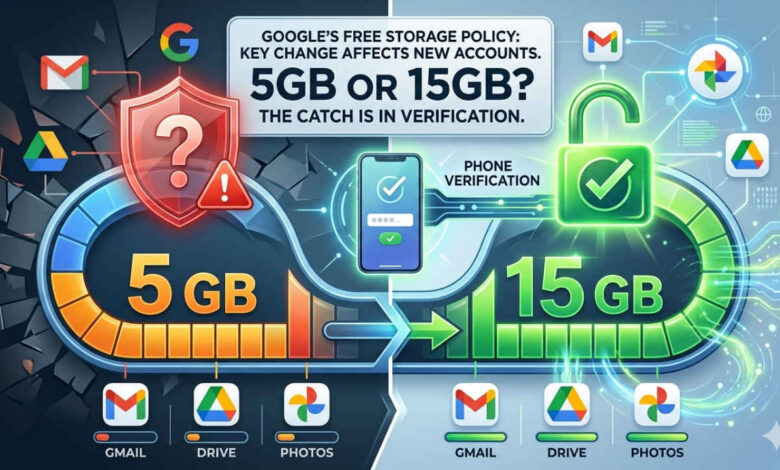
Google may soon change one of the most familiar benefits offered with a Gmail account. Reports suggest the company is testing a new policy that could reduce free cloud storage from 15GB to just 5GB for some users. The change appears to target newly created Gmail accounts and has already triggered strong reactions online from users concerned about privacy and account restrictions.
For years, Google has provided 15GB of free storage to every personal account holder. This storage is shared across Gmail, Google Drive and Google Photos, allowing users to store emails, documents, backups and media files without paying extra. However, according to multiple user reports circulating on Reddit and X, some new accounts are now showing a lower storage limit during the signup process.
The reported policy seems to depend on whether users link and verify a phone number with their Google account. Users who complete phone number verification reportedly continue to receive the standard 15GB free storage. Those who choose not to add a phone number are said to be limited to only 5GB of storage space.
The possible move has sparked debate among users across social media platforms. Some people believe Google is trying to improve account security and reduce spam accounts by encouraging phone verification. Others argue that the company may be collecting more personal data from users in exchange for restoring the full storage limit. The discussion has become especially active among privacy focused users who prefer creating accounts without sharing phone numbers.


Industry observers believe this testing phase could also help Google address another long standing issue. Many users create multiple Gmail accounts to extend their free cloud storage instead of paying for additional space. By reducing storage for unverified accounts, Google may be trying to discourage that practice and push more users toward paid subscription services like Google One.
At the moment, the testing appears to be limited to a small number of regions. Some reports indicate that users in countries such as Kenya and Nigeria have already noticed the reduced storage offer for new accounts. Since the company has not officially rolled out the policy worldwide, many experts believe this could simply be an A B testing phase before a larger decision is made.
Google has not yet updated its official support pages regarding the free storage offer. As of now, the company still publicly states that new Google accounts receive 15GB of free cloud storage. This suggests that the reported change is still in an experimental stage and may not apply to all users globally.
A Google spokesperson reportedly confirmed that the company is testing a new storage policy in selected markets. According to the statement, the goal is to continue offering high quality storage services while encouraging users to improve account security and recovery options. The company has not clarified whether the policy will eventually expand to more countries.
If the change becomes permanent, it could affect millions of future Gmail users, especially those who rely heavily on free cloud services. Gmail remains one of the world’s most widely used email platforms, and many users depend on the free storage for everyday tasks including file sharing, backups and photo storage.
For users who need additional space, Google already offers paid Google One subscription plans in India and several other markets. The company currently provides a 30GB Google One Lite plan priced at Rs 59 per month. The 100GB Basic plan is available for Rs 130 monthly, while the 2TB Premium plan costs Rs 650 per month.
The possibility of reduced free storage highlights the growing pressure on tech companies to balance cloud costs, account security and user demand. While some users may accept phone verification in exchange for more storage, others may view the move as an unnecessary compromise on privacy. Until Google officially confirms a wider rollout, the future of the 15GB free storage offer remains uncertain.