
Supreme Court Questions Reservation Benefits for IAS Officers Children
The Supreme Court raised key questions during a hearing on creamy layer rules and whether reservation benefits should continue for socially advanced families.
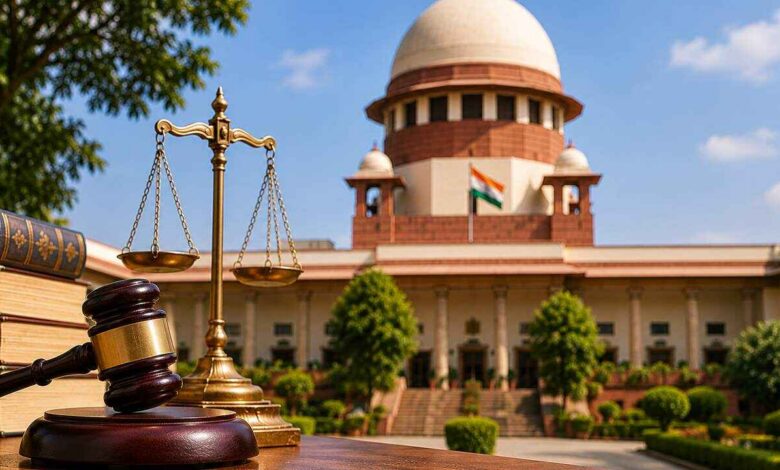
- Supreme Court questions reservation policy
- IAS officers children under discussion
- Creamy layer rules face scrutiny
The Supreme Court made important observations during a hearing related to reservation policies and creamy layer rules, raising questions over whether benefits should continue for families that have already achieved social and economic progress.
During the proceedings, the court examined petitions connected to the implementation of creamy layer restrictions within Other Backward Classes categories. The discussion once again brought attention to the larger debate on whether economic and educational advancement changes the need for continued reservation benefits.
The bench observed that families that have significantly progressed through education and government employment may eventually need to move beyond the reservation system. Judges questioned whether children of parents holding high ranking positions such as IAS officers should continue receiving quota benefits after their families have already attained stability and social advancement.
Justice B V Nagarathna noted that social mobility and educational progress often create a change in circumstances for future generations. The court observed that if benefits continue within the same families across generations, people from economically weaker sections within the same communities could be left behind.


During the hearing, arguments were also presented regarding the difference between economically weaker sections and creamy layer categories. Legal representatives stressed that both classifications serve different purposes and should not be treated in the same manner.
The Supreme Court also referred to earlier principles linked to the Mandal Commission judgment, where exclusion of the creamy layer within OBC reservations had been emphasized. Notices have now been issued to the Centre and other related parties, while the matter has been scheduled for further hearing.
Legal observers believe the future ruling may influence discussions around reservation policies and possible reforms linked to creamy layer regulations in the country.