
Fake Smartphones Flood Markets as Experts Warn Buyers to Check Devices Carefully
Counterfeit smartphones and accessories are spreading rapidly across markets with scammers targeting buyers through cheap deals making careful verification and trusted purchases more important than ever for consumers
Cheap smartphone deals may look attractive at first glance, but experts are warning buyers to stay alert as counterfeit devices continue to enter local markets across India. From fake smartphones to duplicate chargers and earbuds, illegal sellers are using low prices to trap unsuspecting customers.
The concern has grown after recent police action in Delhi exposed a large counterfeit electronics racket. According to reports, authorities uncovered operations linked to fake smartphone products in Karol Bagh and even traced a factory in Moti Nagar allegedly manufacturing duplicate devices branded as popular smartphone models. The incident has once again raised questions about how easily fake gadgets are reaching ordinary buyers.
Technology experts say counterfeit phones are not only financially risky but can also become dangerous during regular use. Many fake devices use poor quality batteries and uncertified internal parts that may overheat, malfunction, or even explode in extreme cases. Buyers attracted by unusually low prices often realize the truth only after facing software issues, poor camera quality, or hardware failures.
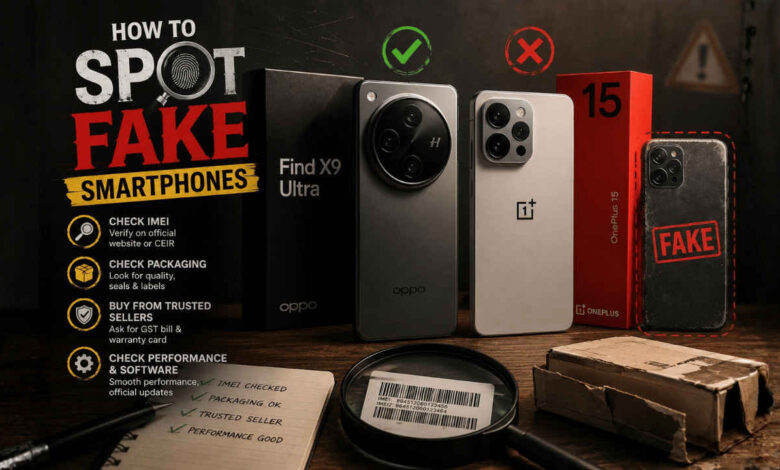
One of the easiest ways to identify an original smartphone is by checking the IMEI number. Every genuine mobile phone comes with a unique IMEI code. Users can verify it by dialing star hash zero six hash on the device and matching the number with the IMEI printed on the retail box and invoice. Customers can also confirm the number through the government backed CEIR verification portal. If the numbers do not match or appear invalid, the device may be counterfeit.


Packaging can also reveal important clues. Fake products often arrive in boxes with spelling mistakes, faded printing, unclear logos, or incomplete warranty information. Original smartphones usually include proper seals, certification labels, and clearly printed serial numbers. Buyers are advised to inspect the box carefully instead of focusing only on price discounts.
Software performance is another major indicator. Counterfeit phones often run modified operating systems that do not receive official security updates. Users may notice lagging performance, weak camera quality, heating problems, or loose buttons soon after purchase. Experts suggest checking the phone settings to verify the model number, Android version, and latest security patch details before making a final decision.
Authorized sellers remain the safest option for buyers. Smartphones and accessories purchased from official brand stores, verified online platforms, or certified retailers are less likely to be fake. Consumers should always ask for GST invoices, original bills, and warranty cards while purchasing expensive gadgets.
Experts also warn people against blindly trusting deals that appear far cheaper than market rates. If a premium smartphone is being sold at an unusually low price without a proper bill or warranty, there is a strong possibility that the device may be fake or illegally modified.
The problem is not limited to smartphones alone. Fake smartwatches, chargers, earbuds, and power accessories are also being sold widely in local markets. Using low quality accessories may damage devices and even create electrical safety risks during charging.
Industry observers believe increasing awareness among consumers is the best defense against counterfeit electronics. They advise buyers to prioritize authenticity, warranty support, and safety over unrealistic discounts. In the long run, spending slightly more on genuine products often saves users from repeated repair costs, poor performance, and security risks.