

FSL Fire Accident Takes Crucial Turn as 1100 Case Files Lost
A special investigation team has confirmed that data from 1100 case files destroyed in the Telangana Forensic Science Laboratory fire cannot be recovered, raising concerns over the impact on criminal investigations.
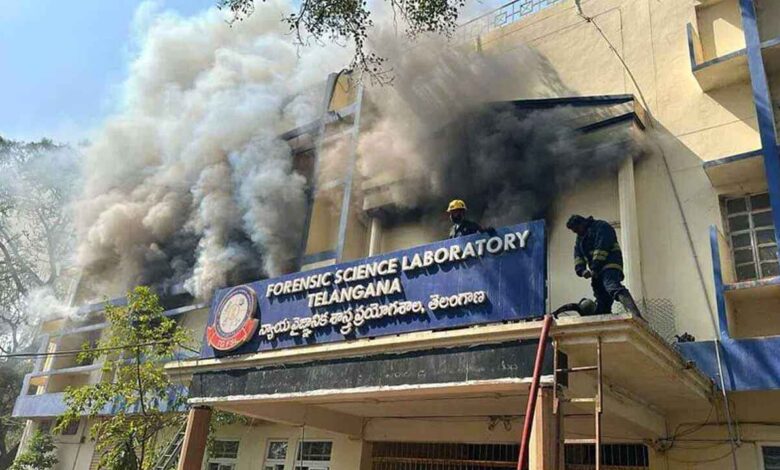
- FSL fire accident destroys 1100 files.
- Data recovery ruled out by special team.
- Forensic lab fire raises probe concerns.
A major development has emerged in the FSL fire accident, bringing clarity but also deep concern. A special technical team from Nagpur, which examined the damage at the Telangana forensic facility, has concluded that data recovery from the destroyed files is not possible.
The fire broke out on the first floor of the Telangana State Forensic Science Laboratory on the seventh of this month. The blaze completely gutted the floor, destroying computers, hard disks and critical case records linked to serious criminal investigations. Only the first floor being affected has also raised several unanswered questions.
After the incident, a special committee was formed to assess the damage and explore the possibility of restoring lost digital evidence. The Nagpur based expert team identified that nearly 1100 files were burned in the fire. Despite repeated technical attempts, the team clearly stated that recovery of data from these cases is not feasible.
The forensic science laboratory plays a central role in crime investigations across Telangana. Evidence collected from crime scenes such as fingerprints, DNA samples, blood, hair and ballistic materials is examined here. The lab also handles analysis of firearms, bullets, drugs, poisons, narcotics, forged documents and disputed signatures, all of which are vital for court proceedings.


With thousands of investigations depending on forensic reports, the loss of these records has triggered serious concern among law enforcement agencies. Officials are now assessing how the destruction of evidence will affect ongoing cases and future trials, as the incident poses a significant challenge to the criminal justice process in the state.


