

Hyderabad: Fake Ginger Garlic Paste Racket Busted, 70 Quintals Seized
Authorities uncover a major food adulteration racket in Hyderabad, seizing 70 quintals of fake ginger garlic paste made with harmful chemicals, raising serious concerns over public health and safety.
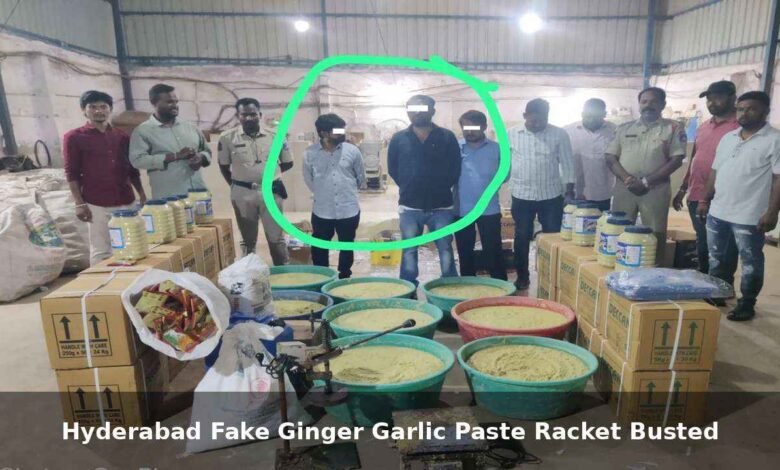
- Hyderabad fake ginger garlic paste seized
- 70 quintals adulterated paste confiscated
- Chemicals used in food adulteration racket
A major food adulteration racket has been exposed in Hyderabad, where authorities seized a massive 70 quintals of fake ginger garlic paste prepared using dangerous chemicals. The crackdown has once again raised alarms over food safety in the city.
The operation was carried out in Attapur, where officials raided warehouses operating under the name Deccan Traders. During the inspection, it was discovered that the paste was being manufactured using harmful substances including acetic acid, synthetic food colors, and garlic waste. Three individuals involved in the illegal activity were arrested.
Officials revealed that the accused were running the operation from two separate locations in MM Pahadi. Driven by profits, they were producing large quantities at low cost without any concern for public health. The conditions inside the warehouses were found to be extremely unhygienic, with flies, dust, and poor sanitation.
The adulterated paste was being packed in plastic containers and supplied across the city to wholesale and retail grocery shops. Investigations also found that catering services for weddings and events were among the buyers of these products.


In a separate but related incident, another illegal food unit was busted in Katedan by the Mailardevpally police. Authorities found that spoiled eggs and harmful chemicals were being used to prepare food items such as donuts and cakes, often consumed by children. Three more suspects were identified and taken into custody.
Officials warned that strict action will be taken against anyone involved in food adulteration, emphasizing that such activities pose a serious threat to public health. Despite repeated inspections and raids, cases of fake and unsafe food production continue to surface, highlighting the need for stricter enforcement and awareness.


